
Dreams and Rehoboth


Some dreams arrive before we have the strength to carry them.
Joseph, a key figure in the Book of Genesis, was the favored son of Jacob, who gifted him a beautiful coat. His brothers, envious of their father's affection, plotted against him, ultimately selling him into slavery in Egypt. Despite his hardships, including false accusations and imprisonment, Joseph remained steadfast and interpreted dreams, which led to his rise to power in Pharaoh's court. When a famine struck, Joseph's wisdom and foresight saved Egypt and surrounding nations. Eventually, he reconciled with his brothers, showcasing themes of forgiveness and divine purpose.
In a modern city, a young woman named Maya had dreams of becoming a renowned chef. Her family, however, doubted her ambitions, believing that she should pursue a more traditional career. Frustrated by their lack of support, her sibling sabotaged her cooking competition entry, leading to her disqualification. Determined, Maya moved to a new city, where she worked at a small restaurant. Her talent caught the eye of a famous chef, who mentored her. After years of hard work, Maya opened her own restaurant, gaining a reputation for innovative dishes. When her family faced financial difficulties, she offered them support, demonstrating that dreams, though initially unrecognized, can lead to unexpected blessings and reconciliation.
Some dreams arrive before we have the strength to carry them.
Joseph was young when he saw himself in a place of honour. He did not yet know the cost of that vision. He did not know that the path to fulfilment would pass through rejection, slavery, false accusation, prison, waiting, and silence. He only knew that God had shown him something larger than his present life.
That is what makes Joseph’s story so powerful. It is not only a story about dreams coming true. It is a story about the record a person keeps while the dream looks delayed.
Joseph’s brothers criticised him. A master’s wife falsely accused him. Prison could have buried him. Yet he kept choosing integrity. He kept using his gifts. He kept serving in the place where he had been sent, even when that place felt unfair.

Joseph’s dream attracted criticism before it attracted honour
Joseph’s first recorded struggle was family rejection.
He had dreams that suggested future honour, and when he shared them, his brothers hated him even more. To them, his words sounded proud. To Joseph, the dreams may have felt like divine mystery. Whatever his tone, his future became a source of present trouble.
There is a particular pain in being criticised for something you did not fully understand yourself. Joseph had a glimpse, not a map. He had a promise, not a timetable. He could not explain how it would happen. He could only hold what he had seen.
Many people lose heart at this stage. A dream is mocked, questioned, reduced, or misread. Someone asks who you think you are. Someone points to your age, your background, your past, your lack of resources. The pressure is not always physical. Sometimes the criticism works slowly, until the dreamer starts editing the dream to make others comfortable.
Joseph’s brothers did more than criticise him. They stripped him of his coat, threw him into a pit, and sold him. The visible sign of favour became a target. Yet the dream remained.
This is where Joseph’s record begins to form. Not the record written by his enemies. Not the story told by jealous voices. The deeper record was being formed in his choices.
He could not control what his brothers did. He could not control the lies they told their father. He could not control the road to Egypt. But he could control the person he became on that road.
A God-given dream does not remove opposition. Sometimes it reveals it.
The dream did not spare Joseph from the pit. It gave meaning to his survival after the pit.
Integrity kept Joseph steady when life became unfair
Joseph arrived in Egypt as a slave, yet Scripture presents him as a person who served well. In Potiphar’s house, he did not sulk his way through disappointment. He worked with diligence. He carried excellence into a place he had never chosen.
That matters.
Integrity shines brightest when no one would blame us for becoming bitter. Joseph had reasons to withdraw. He had reasons to do the least possible. He had reasons to treat every Egyptian household as an enemy space. Instead, he served so well that responsibility was placed in his hands.
Then came another blow. Potiphar’s wife tried to draw Joseph into sin. Joseph refused. His refusal was not only about fear of consequences. It was about honour before God and faithfulness in the trust given to him.
He chose the costly right thing.
And the result, at least at first, looked unjust. He was falsely accused and sent to prison.
That part of the story can unsettle us. We want integrity to bring quick reward. We want honesty to be recognised immediately. We want truth to clear the air. Sometimes it does. Sometimes it does not.
Joseph did the right thing and still suffered.
Yet his integrity was not wasted. It became part of his record. The palace would later need a man who could be trusted with power, grain, strategy, wealth, and the survival of nations. God was shaping a person who would not sell his character for comfort.
There is a difference between a gift and a vessel. A gift can open a door, but character determines whether a person can remain in the room without being ruined by it.
Joseph had the gift of interpreting dreams. He also had the strength to say no when compromise offered him an easier path. His integrity made his gift safe.
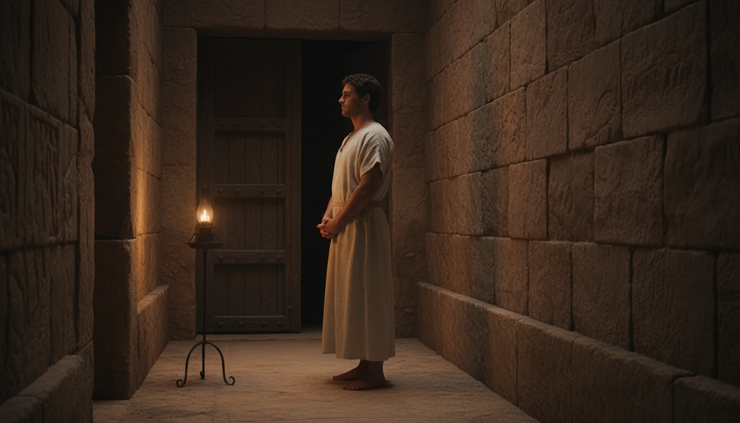
Joseph kept using his gift in the place of confinement
Prison often feels like the end of a story. For Joseph, it became another hidden chapter of preparation.
He had lost his home, his family, his freedom, and his reputation. False accusation had followed him into confinement. Yet the gift did not leave him. More than that, Joseph did not stop using it.
In prison, he noticed the sadness of Pharaoh’s cupbearer and baker. That detail is easy to miss. Joseph was suffering, but he remained sensitive to the condition of others. Pain did not make him blind. Disappointment did not make him selfish.
He asked why their faces looked troubled. Then he listened. Then he interpreted their dreams.
This was not a grand stage. There was no crowd. No honour. No guarantee that anyone would remember him. Yet Joseph served with the gift he had.
That moment teaches a quiet but powerful lesson. The gift that will one day bring elevation may first be required in an unseen place. The skill that will serve kings may first serve prisoners. The wisdom that will feed nations may first comfort one desperate person in a dark room.
Joseph’s gift was not only dream interpretation. He carried several gifts that worked together:
Discernment
He could recognise that dreams carried meaning and that people carried burdens.
Faithfulness
He served in Potiphar’s house and in prison with the same serious spirit.
Administration
He was trusted with responsibility wherever he went.
Courage
He told the truth, even when truth was uncomfortable.
Forgiveness
Later, when power was in his hands, he did not use it to destroy those who had wounded him.
These gifts did not always look glorious while Joseph used them. In prison, they looked ordinary. They looked like listening, interpreting, managing, waiting, and showing up again.
Then the cupbearer forgot him.
That delay can feel almost cruel. Joseph had helped someone who could help him, but nothing changed. Days passed. Then more days. Yet the silence of people did not mean the silence of God.
Some records are kept in heaven before they are recognised on earth.
The gift that caused tension became the gift that opened the palace
Joseph’s dreams brought him trouble in his father’s house. His ability to interpret dreams brought him before Pharaoh.
That is one of the beautiful turns in the story. What once made him look strange became the very thing Egypt needed. What his brothers resented became the doorway to his assignment. What seemed to attract opposition became the instrument of elevation.
Pharaoh had troubling dreams, and no one around him could give the answer. Then the cupbearer remembered Joseph. In one day, Joseph moved from prison to the palace.
Yet Joseph did not take glory for himself. He pointed to God as the giver of interpretation. This was not false modesty. It was alignment. Joseph knew the source of his gift.
Then he did more than interpret the dream. He gave wise counsel. Egypt would face years of abundance followed by years of famine. Joseph advised Pharaoh to appoint a discerning and wise person to gather grain during the good years, so the land would survive the lean years.
The dream opened the door, but wisdom gave Joseph a seat of responsibility.
Pharaoh recognised the Spirit of God in him and elevated him. Joseph became a ruler in Egypt, entrusted with a national plan that would preserve life. His earlier training now made sense. Potiphar’s house had trained him in management. Prison had trained him in responsibility under pressure. Waiting had trained him in patience. Betrayal had trained him in mercy.
Nothing was wasted.

Joseph’s elevation was not merely personal glory. It was purposeful glory. His rise saved many lives, including the lives of the brothers who had betrayed him.
When they later stood before him in need, Joseph held power over the people who had once held power over him. This is where the record of his heart mattered most. He could have used the throne as revenge. Instead, he saw God’s hand in the story. He recognised that what others intended for harm, God had turned towards preservation.
That kind of perspective does not appear overnight. It grows in the hidden years.
A journal can help you keep the right record in hard seasons
Joseph lived long before modern journals, but his story invites a question about memory. What do we record when life is unfair? What do we rehearse when people misunderstand us? What evidence do we collect in the mind?
A journal will not remove the pit. It will not silence every accusation. It will not make waiting easy. Yet it can help guard focus when emotions are loud.
During hard seasons, the heart keeps records. Some records deepen bitterness. Others strengthen faith.
A journal can become a place to write:
The dream you believe God has placed in your heart
The lessons you are learning in hidden places
The temptations you need strength to resist
The ways God has helped you before
The names of people you need to forgive
The gifts you can still use, even in confinement
The prayers you are not ready to say out loud
The small signs of progress that might otherwise be forgotten
This practice is not about pretending pain is small. Joseph’s pain was real. Betrayal is real. False accusation is real. Delay is real. A faithful journal does not deny grief. It gives grief somewhere honest to go.
It also helps separate fact from fear. A painful day can start to sound like a failed life. A long wait can start to sound like abandonment. Writing can slow that spiral. It can help a person say, “This is what happened, but this is also what God has promised. This is what I feel, but this is what I choose. This is what I lost, but this is what remains in my hands.”
In that sense, a journal can become a witness.
It can remind you that you did not quit when quitting looked reasonable. You prayed when your voice shook. You chose integrity when compromise offered relief. You used your gift when no one applauded. You kept your heart soft when bitterness asked for a permanent room.
That is a record worth keeping.
Rehoboth is the spacious place after struggle
The word Rehoboth appears in the story of Isaac, not Joseph. Isaac’s servants dug wells, and again and again there was conflict over them. Then they dug another well, and no one quarrelled over it. Isaac named it Rehoboth, recognising that the Lord had made room for them.
Rehoboth speaks of space after strife. Room after resistance. A place where the struggle does not have the final word.
Joseph’s palace moment was a kind of spacious place. Not because the pain had never happened, but because the pain no longer had the power to define the whole story. He stood in a place wide enough to feed nations and forgive brothers. He had room to live beyond the pit.
That is the hope woven through his life. God does not merely lift Joseph for Joseph’s sake. God lifts him into purpose. The dream becomes service. The glory becomes preservation. The record becomes witness.
A Rehoboth season may not look like a palace for everyone. It may look like peace after years of inner conflict. It may look like freedom from the need to prove yourself. It may look like restored courage, a renewed calling, or the ability to bless people without being chained to what they did.
The question is not only whether a spacious place is coming. It is also what kind of person is being formed on the way there.
Will the record show resentment carefully stored, or faith carefully tended? Will it show compromise excused, or integrity guarded? Will it show gifts buried because the setting was painful, or gifts used because God was still present?

What record are you keeping today? Will it elevate you or lead you to your Rehoboth?
Joseph’s life answers with quiet strength. Keep a record of faithfulness. Keep a record of God’s help. Keep a record of lessons learned in places you did not choose. Keep a record that reminds you of the dream without making bitterness your companion.
The pit did not cancel Joseph. The prison did not bury him. The false accusation did not define him. The delay did not erase his name. His gift made room for him, and his integrity prepared him to stand in that room with clean hands.
The same God who was with Joseph in hidden places is able to give meaning to hidden seasons now. So keep writing. Keep serving. Keep refusing what would stain your spirit. Keep using the gift, even when the room feels small.
A faithful record may become the road to elevation. It may lead, step by step, to the spacious place God has prepared.



Comments